Missouri's cannabis regulators have concluded there's no case for issuing new cultivation, manufacturing, or dispensary licenses right now. A statewide market study released last week found the existing footprint of licensed operators is meeting consumer demand, and that sales aren't overly concentrated among facilities. For an industry watching license caps closely, that's a meaningful signal - but not the whole picture.
What the Study Actually Measured
The Division of Cannabis Regulation commissioned Cannabis Public Policy Consulting LLC, a New York-based firm, to examine how sales are distributed across Missouri's licensed facilities. The findings: roughly 93% of cannabis purchases happen at licensed dispensaries, annual dispensary sales climbed from about $1.30 billion in 2023 to $1.51 billion in 2025, and the number of active dispensary licenses rose from 201 to 220 over that stretch. Average annual sales per dispensary held fairly steady, in the $6.5 million to $6.9 million range. That stability matters. It suggests the market has absorbed new entrants without diluting per-store revenue to the point of distress - a pattern regulators in other adult-use states have struggled to achieve.
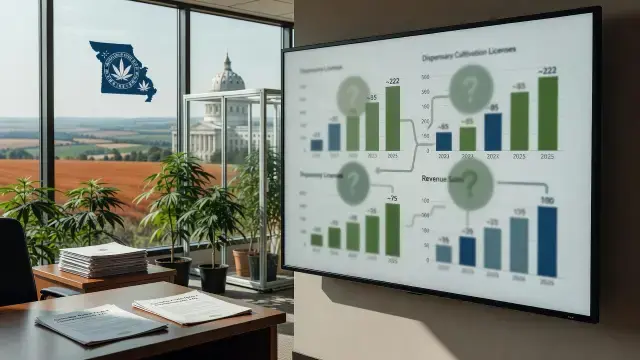
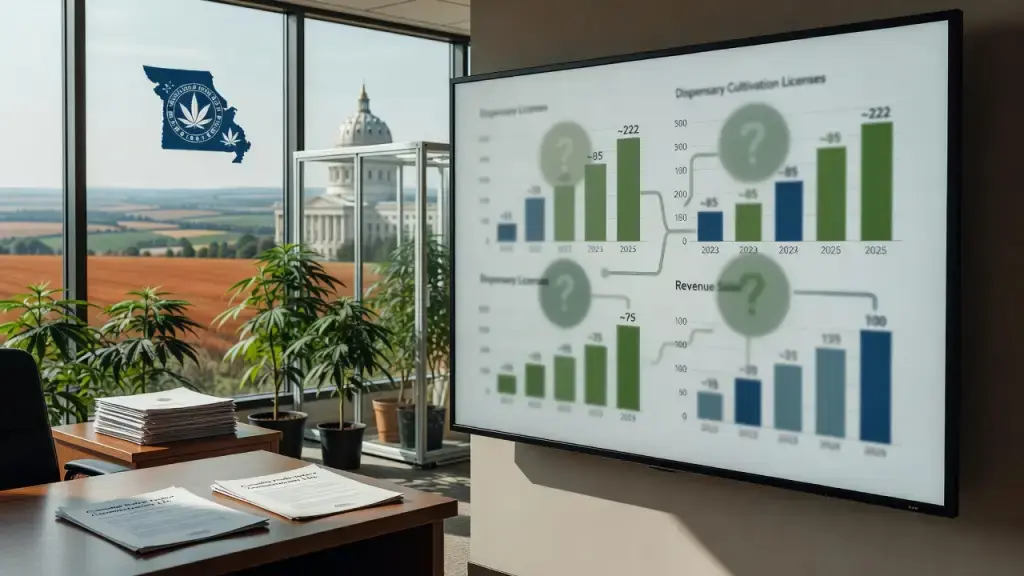
As of July, Missouri had approved 222 dispensary licenses, 63 manufacturing licenses, 85 cultivation licenses, and 20 microbusiness approvals. Taken together, the numbers paint a market that looks saturated enough to discourage new license rounds, at least for now.
The Ownership Blind Spot
Here's the catch, though. The study measured concentration by facility, not by ownership. CPPC was upfront about this limitation, writing that "ownership-based analyses would provide a more comprehensive assessment of market structure by evaluating concentration across common ownership groups." In practice, that means two, three, or more dispensaries operating under separate licenses could belong to the same parent company, and this study wouldn't have caught it.
Division Director Amy Moore acknowledged as much, saying the agency intends to incorporate ownership data into future market evaluations. That's a notable admission from a regulator whose job is partly to prevent vertical integration and cross-ownership from quietly reshaping a market that's supposed to reflect a diverse operator base, including social equity licensees.
Why This Lands Now
The timing isn't incidental. At least two antitrust lawsuits have been filed alleging certain cannabis companies violated Missouri law, and earlier this month regulators proposed rules requiring every licensee to file an annual report disclosing ownership percentages. Spokeswoman Lisa Cox noted those disclosures would remain confidential under the same rules that already protect other licensee information submitted to the division - a detail that will matter to operators wary of competitors gaining insight into their corporate structure.
For multi-store operators and investors, the message is twofold. A market study clearing the field of overconcentration concerns on paper is good news for anyone hoping to avoid a wave of new competitors. But the forthcoming ownership-disclosure rules suggest regulators are building the data infrastructure to look harder at who actually controls Missouri's dispensary network - not just how many storefronts exist.
What Operators Should Watch
- Whether the annual ownership-percentage reports become a precursor to tighter limits on common ownership across licenses
- How confidentiality protections hold up if litigation forces disclosure of ownership structures in court
- Whether future market studies, now armed with ownership data, reach different conclusions about concentration than this one did
- How wholesale pricing and per-dispensary sales trends shift if the license cap holds steady through continued demand growth
To put it plainly, Missouri's regulators just told the market it's balanced enough to leave alone. Whether that holds once ownership data enters the equation is a separate question, and one the division itself admits it can't yet answer.