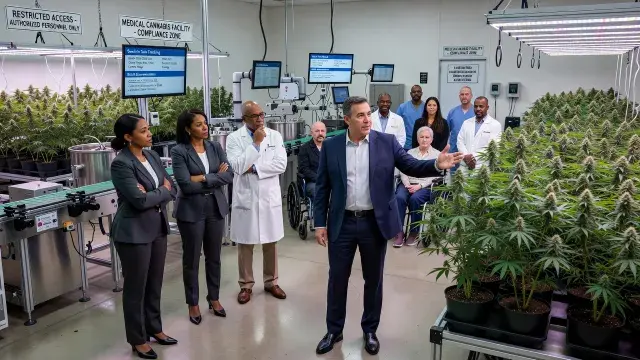
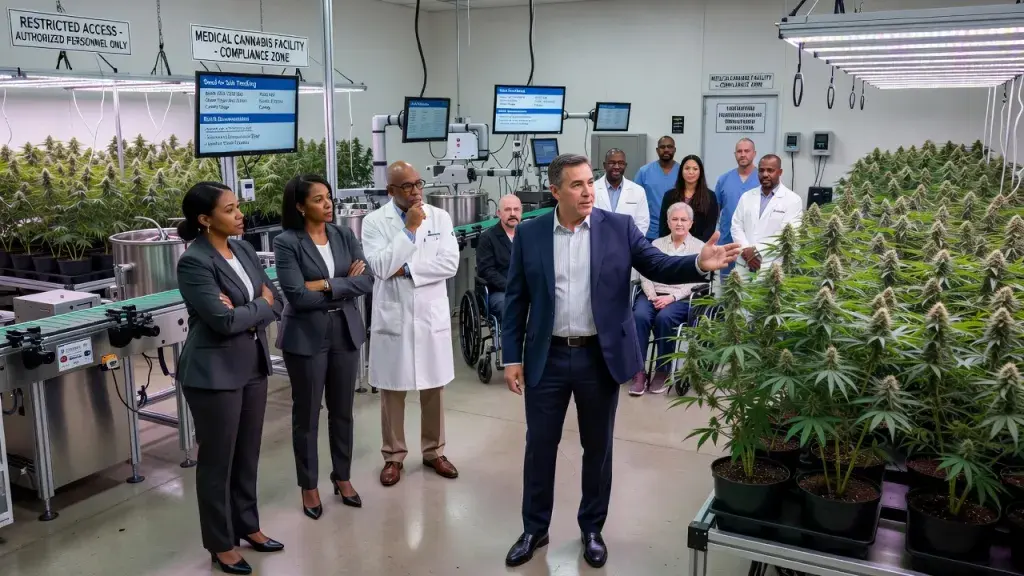
MACON-BIBB, Ga. - A decade after Georgia legalized medical cannabis, the program remains narrower than backers wanted, and this year's expansion bills died in committee again. Fine Fettle, one of only three licensed producer-operators in the state, is trying a different approach: get lawmakers, physicians, and patients inside the building before the next legislative session starts.
Judson Hill, market president of Georgia Fine Fettle, framed the tour as a starting point rather than a lobbying event. Operators in tightly capped markets like Georgia's often find that policymakers have never actually seen a cultivation room, a manufacturing line, or the compliance documentation that tracks a product batch from clone to dispensary shelf. That gap matters more than it sounds. States with more mature regulatory frameworks - Missouri among them, where dispensaries lean on platforms like marijuana retail software missouri to manage seed-to-sale tracking and inventory reconciliation - didn't get there overnight. They got there because legislators and regulators understood the operational mechanics well enough to write workable rules.
Georgia's medical cannabis structure is limited by design: a small number of vertically integrated licenses, tight product-form restrictions, and a patient registry that critics say is still too hard to access. Senate Bill 220 and House Bill 227, the two measures that stalled this session, would have loosened the medical cannabis card process and updated allowable product forms. Neither reached a floor vote. For operators, that kind of legislative limbo isn't just a policy disappointment - it's a business constraint. Limited product forms mean limited SKUs, which means limited wholesale menus and a patient base that may go looking for alternatives outside the regulated system.
Why Facility Tours Matter for Compliance Literacy
State Representative Anissa Jones, who joined the tour, made a point that resonates across regulated cannabis nationally: the process is controlled, documented, and repeatable - not the informal cultivation some lawmakers still picture when they hear "medical marijuana." That perception gap shows up in statehouses across the country. Compliance logs, lab testing requirements, and batch consistency standards are the backbone of any licensed cannabis program, and they're also the easiest things for outside observers to underestimate. When legislators understand COA requirements and testing protocols firsthand, the policy conversation shifts from abstract worry to operational specifics.
The 20% Problem and Product Access
Dr. Elmore Alexander's comments point to a narrower but persistent issue: Georgia's current product lineup reportedly serves a majority of patients adequately, but a meaningful minority needs product forms the state doesn't yet allow. That's not a small operational detail for licensed producers. Expanding allowable forms requires regulatory rule-making, updated packaging and labeling standards, and often new manufacturing equipment - real capital costs for operators already working within a capped, three-license market. Until Georgia's legislature moves on program expansion, both patients and operators are working within a system that hasn't caught up to the medical cannabis models operating in more developed state markets.
What Comes Next
Fine Fettle's tour won't resolve the legislative gridlock on its own, but it reflects a pattern seen elsewhere: operators investing in education because regulatory literacy tends to precede regulatory reform. Whether Georgia lawmakers revisit SB 220 or HB 227 in a future session remains an open question. In the meantime, the state's medical cannabis operators are left managing a limited product catalog, a constrained patient registry, and a legislative calendar that has, so far, not prioritized expansion.