Brandon, South Dakota has moved to lower two of its cannabis licensing requirements - the annual renewal application fee and the minimum liability insurance threshold - after a local cultivator pressed city officials for a closer look at how its costs stacked up against neighboring markets. The Brandon City Council acted in two separate votes in June, trimming fees that it acknowledged had drifted to the high end of the regional range. For licensed cannabis businesses operating on thin margins, the changes are modest but real.
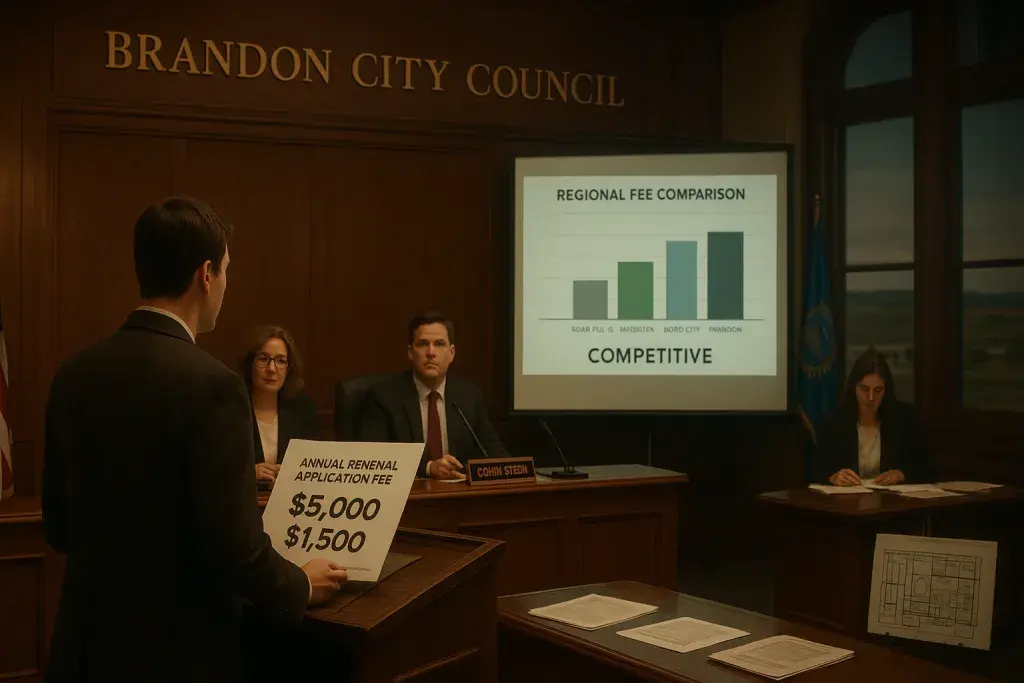
The annual renewal application fee dropped from $5,000 to $1,500, following a June 1 resolution. City staff had acknowledged in earlier meetings that renewal processing is substantially lighter work than initial licensing - annual inspections, absent significant facility changes, are comparatively straightforward. That's a reasonable basis for tiered pricing, and it's the kind of fee structure that operators in more mature markets have long pushed for. Licensing cost architecture matters to small cannabis businesses in particular; a $3,500 annual reduction in overhead goes directly to the bottom line, especially for a cultivator that isn't running a high-volume retail front end. Operators looking at licensing economics across state lines - including those familiar with cannabis dispensary software nevada and other competitive Western markets - understand that fee structures vary widely and can meaningfully affect site-selection and licensing decisions.
On June 15, the council unanimously approved a separate ordinance amendment reducing the minimum liability insurance requirement for cannabis establishments from $2 million to $1 million. Insurance remains one of the more stubborn cost centers for licensed cannabis operators - standard commercial carriers have historically been reluctant to write cannabis policies, and those who do often price the coverage to reflect that reluctance. A $1 million minimum liability threshold is still substantive coverage; it's not a nominal requirement. But the reduction does ease the annual insurance spend for smaller operators, particularly cultivators who don't carry the same public-facing exposure that a busy dispensary floor carries.
What Cannanaut Actually Asked For - and Didn't Get
Both changes were initiated by Cannanaut, a local cannabis cultivator that wrote to the council in April requesting a fee review. Here's the catch, though: the company didn't walk away with everything on its list. Cannanaut had originally asked for the annual renewal fee to be waived entirely - not reduced, eliminated. The council pulled it back to $1,500 instead. A separate request to lower the general licensing fee was denied outright; Councilwoman Barb Fish indicated she considered that fee level appropriate. Councilman Colin Steen was direct about the council's motivation: "We're doing this just to be competitive. We were very much at the high end in the area."
That framing is worth sitting with. Local governments across cannabis-legal states have gradually learned - some faster than others - that licensing fees set too high relative to neighboring jurisdictions don't just burden existing operators; they can steer new applicants elsewhere. A cultivator weighing where to establish or expand operations will factor in the total annual cost of compliance, and municipal fee structures are part of that calculation. Brandon's council appears to have internalized that dynamic, even if it drew the line at full fee waivers.
The Broader Pressure on Municipal Cannabis Licensing Economics
Brandon's adjustment reflects a tension that plays out in licensed cannabis markets across the country. Municipalities set cannabis licensing fees for any number of reasons - to cover administrative costs, to generate revenue, or sometimes, frankly, to limit the number of operators willing to absorb the expense. But when fees climb well above actual processing costs, they function less like regulatory tools and more like informal barriers to entry.
The council's own staff effectively acknowledged this with their comments about renewal processing: if an annual inspection is genuinely less resource-intensive than an initial one, and no significant facility changes have occurred, charging $5,000 for it is difficult to justify on a cost-recovery basis alone. Bringing the renewal fee in line with actual administrative burden is sound policy - not a favor to the industry, just accurate pricing. Cannabis businesses, like any licensed operator in a heavily regulated sector, benefit from fee structures that reflect what compliance actually costs the issuing authority to administer.
The insurance adjustment follows a different logic. Minimum insurance requirements in cannabis ordinances are consumer and public-safety tools - they ensure that licensed establishments can cover liability claims if something goes wrong. Halving the minimum from $2 million to $1 million isn't a trivial change, and any operator taking advantage of the lower threshold should weigh whether that coverage level is genuinely adequate for their operation. A $1 million floor may be appropriate for a cultivation facility with limited public access; it may warrant a harder look for a business with more direct consumer interaction. The requirement sets a floor, not a ceiling.
What Comes Next
The Brandon City Council's next regular meeting is scheduled for July 7. No additional cannabis licensing changes are on the public agenda as of the council's June actions. For Cannanaut and any other licensed cannabis operators in Brandon, the practical effect of June's votes is a lower annual cost of doing business in the city - not a dramatic restructuring, but a meaningful acknowledgment that the prior fee schedule had drifted out of step with the local market. That's often how cannabis licensing reform moves at the municipal level: incrementally, one written request and one council vote at a time.