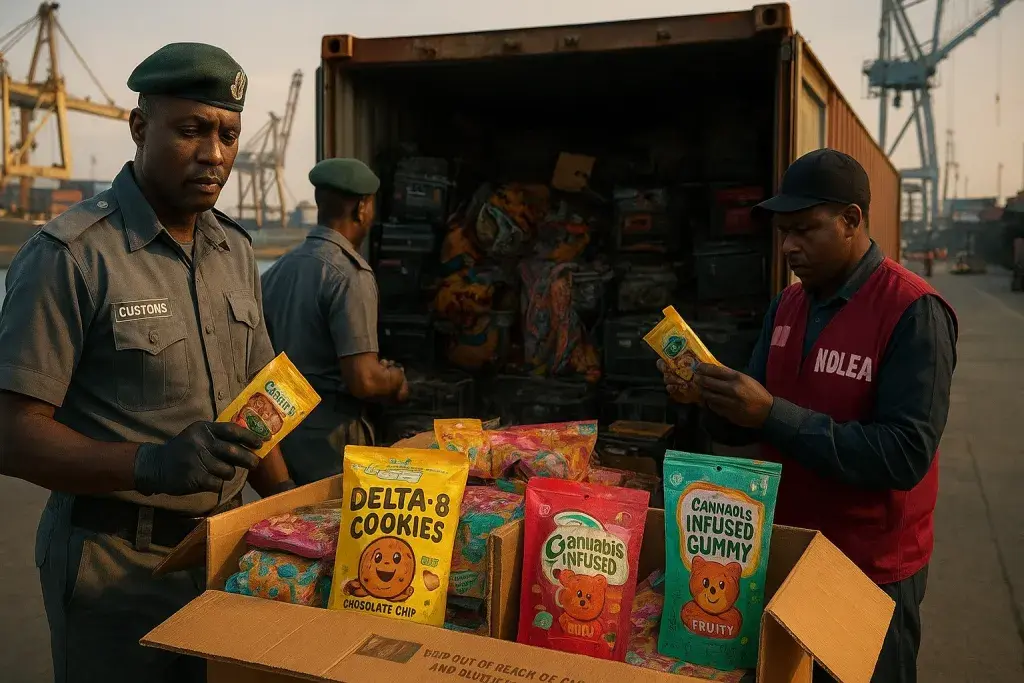
Nigeria's drug enforcement agency is telling parents to look twice at cookies and gummies in the house - not the usual advice from a narcotics regulator, but a sign of how far product disguise tactics have traveled in the illicit cannabis trade. The National Drug Law Enforcement Agency (NDLEA) says recent seizures show traffickers packaging prohibited substances to look exactly like commercial hemp-derived edibles, down to the flavor branding and vegan labeling.
The interception itself happened at Tin Can Island Port in Lagos, where Nigeria Customs officers pulled two 40-foot containers loaded with used vehicles, generators, batteries and fabrics - and, tucked among them, thousands of Delta-8 pre-roll cookies and cannabis-infused gummy packs with a combined street value estimated near ₦373.8 million. That's a meaningful supply chain breach, and it raises a question every compliant operator in a regulated market already wrestles with: how do you verify what's actually inside a sealed consumer package before it reaches a shelf? In licensed U.S. markets, that verification runs through seed-to-sale tracking, batch-level COAs, and point-of-sale systems built to flag mismatched SKUs - infrastructure platforms like Maryland cannabis POS were designed around, precisely because manual inspection doesn't scale once volume increases. Maryland cannabis POS
Here's the catch for legitimate hemp and cannabis brands operating internationally: products originating from the U.S., packaged with the same "Delta 8," "vegan," and "hemp-derived" language legal operators use for genuine compliance disclosures, are now doing double duty as camouflage for contraband. That's a branding problem as much as a law enforcement one. When traffickers borrow the visual language of legal compliant packaging - flavor names, hemp-derived claims, cute pouch design - it muddies consumer trust in the entire category, including for companies doing everything right.
Why Packaging Design Became a Smuggling Tool
Compliant packaging in regulated markets exists for a reason beyond marketing: child-resistant closures, potency labeling, and clear THC content disclosures are safety requirements, not decoration. Traffickers exploiting that same aesthetic - bright colors, fruit flavors, snack-like presentation - aren't following those safety standards; they're mimicking the surface without the substance. NDLEA officials flagged this directly, noting the appeal to children and students as a genuine public health concern, separate from any enforcement angle.
For dispensary operators and brands in fully regulated markets, this cuts both ways. It's a reminder that lab testing, batch documentation, and verified supply chains aren't bureaucratic overhead - they're the difference between a product consumers can trust and one that looks identical to something smuggled through a shipping container. Retailers sourcing wholesale inventory should expect more scrutiny on provenance documentation going forward, not less.
What Cross-Border Enforcement Means for Legal Operators
International seizures tied to disguised edibles tend to trigger tighter import and customs scrutiny across the board, even for legitimate hemp-derived products moving through legal channels. Operators exporting or importing cannabis-adjacent goods should anticipate longer clearance times and more document requests at ports, simply because customs agencies now have a fresh, concrete example of concealment tactics to watch for.
The broader lesson isn't really about cookies or gummies specifically. It's about the persistent gap between what compliant packaging is supposed to signal - verified potency, tested ingredients, age-gated access - and what bad actors can convincingly fake with a good printer and the right flavor name. Parents were the audience for this particular warning. Supply chain compliance teams should be paying attention too.