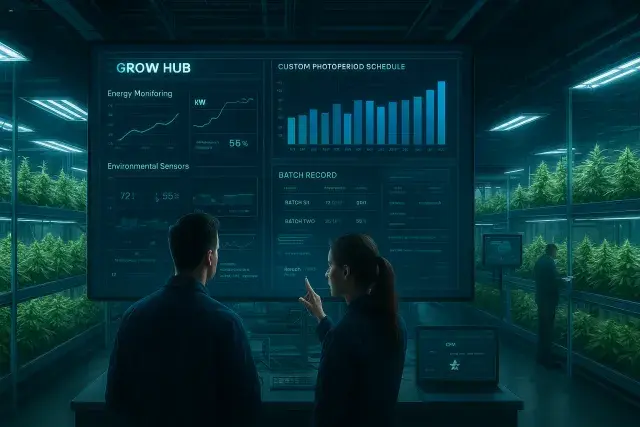
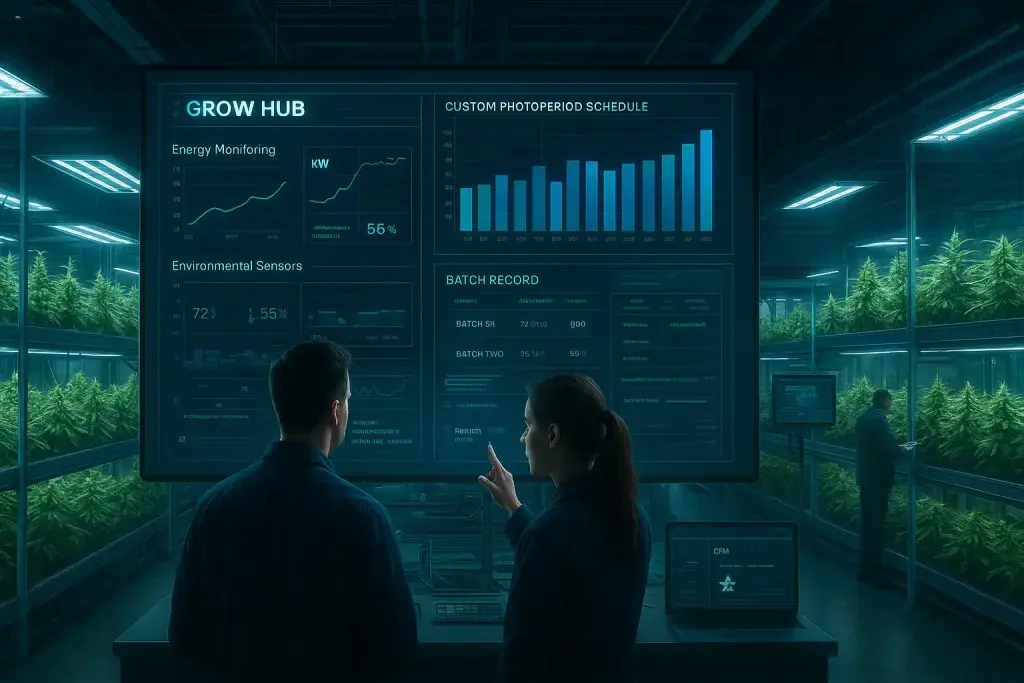
TSRgrow is rolling out a substantial upgrade to GROWHub, its cultivation software platform, adding analytics, energy monitoring, batch-record tools, Metrc integration and building-system connectivity for the 2026 season. The expansion pushes GROWHub beyond lighting control and into something closer to a full operations record for commercial grow facilities. For multi-state operators managing several cultivation sites, that shift matters - fragmented data across separate systems has long been a quiet drag on efficiency and compliance readiness alike.
Cultivation software has generally lagged behind the retail side of the industry. Dispensaries adopted point-of-sale and customer-relationship tools years ago; a operator running a Maryland storefront alongside a cultivation license might already rely on a crm for cannabis dispensary maryland to manage sales, loyalty and compliance reporting at the retail counter, while the grow room upstream still runs on spreadsheets and disconnected controllers. GROWHub's expansion targets that imbalance directly, aiming to give cultivation teams the kind of centralized, data-driven visibility that retail operators have had for some time.
Why cultivation data has stayed siloed
Here's the operational reality: a commercial grow generates enormous volumes of information - light intensity by zone, photoperiod schedules, energy draw, environmental readings, batch-level cultivar data - but that information typically lives in whatever system happened to control each piece of equipment. Lighting controllers track lighting. Building management systems track HVAC and power. Compliance staff maintain separate logs for Metrc reporting. Nobody owns the whole picture, and reconciling it after the fact is manual, slow work that consumes cultivation-team hours that could go toward actual crop strategy.
GROWHub's new architecture attempts to collapse those silos into one connected system. Growers can build lighting recipes by room, rack or growth stage, adjust remotely, and pull historical reports comparing crop cycles side by side. That's a meaningful operational upgrade - the ability to compare cycle six against cycle two on the same dashboard, rather than reconstructing it from paper logs, is the kind of repeatability commercial cultivation has needed for a while.
Compliance pressure is the real driver
The batch-record and Metrc integration pieces deserve particular attention. Track-and-trace compliance already demands detailed recordkeeping from seed to sale, and regulators in mature markets have shown little patience for gaps in documentation during audits. Tying cultivation conditions directly to batch identity - rather than reconstructing them from separate logs after an inspector asks - reduces the manual reconciliation that creates errors in the first place.
That matters more, not less, as federal rescheduling discussions continue and states tighten reporting expectations. Operators who can produce a clean, traceable cultivation record stand in a stronger position during audits, inspections, and any future federal compliance framework that emerges. Compliance officers reading this should note: software that documents the grow as it happens is a different risk posture than software that requires reconstruction after the fact.
Energy monitoring meets facility economics
Energy costs are a real line item in cultivation, particularly for indoor and greenhouse operations running LED arrays around the clock. Connecting Remote Power infrastructure data with cultivation and environmental information lets operators see, in one place, how a given lighting strategy affects both crop outcomes and utility spend - two numbers that are usually tracked separately and rarely compared directly.
Expanded BMS connectivity extends that logic to the whole facility, not just the grow room. In practice, that reduces the number of independent platforms an operations team has to log into just to understand what happened during a crop cycle. Whether that translates into measurably lower operating costs will depend on how individual operators use the data - the platform provides visibility, not automatic savings - but the direction is consistent with where commercial cultivation technology needs to go.