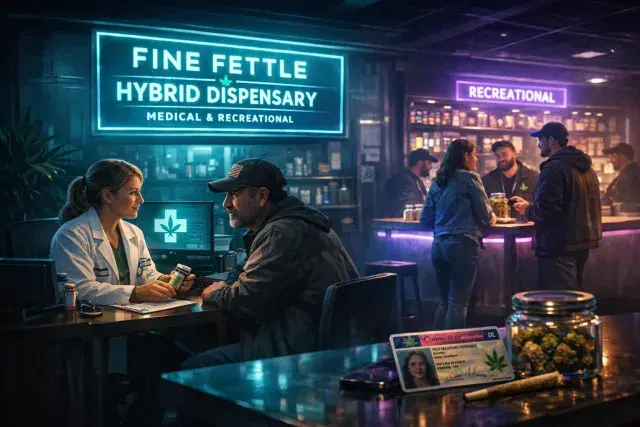

Aric Klar built his retail reputation selling toys. Now he's betting that the same operational instincts - product curation, customer experience, community trust - transfer directly into licensed cannabis retail. Klar, who founded Toyology Toys in West Bloomfield in 2011 and grew it into a multi-location Metro Detroit chain, is expanding his portfolio through Quality Roots, a recreational and medicinal cannabis dispensary brand. A Hamtramck location at 2024 Caniff St. is expected to open Jan. 7, following Quality Roots' first dispensary in Battle Creek.
What Cross-Sector Retail Experience Actually Means in a Licensed Cannabis Operation
The idea that general retail skill translates cleanly into dispensary operations sounds appealing. In practice, though, the gap between running a toy store and running a licensed cannabis facility is substantial - and worth spelling out for any operator coming from outside the industry.
A Michigan recreational and medicinal dispensary operates under the Marijuana Regulatory Agency, which mandates seed-to-sale tracking through METRC, Michigan's statewide cannabis traceability system. Every product batch that enters the budroom - flower, concentrates, edibles, tinctures - must carry a compliant METRC tag. Point-of-sale systems must integrate with that tracking infrastructure, meaning the POS terminal at a dispensary is not a standard retail checkout setup. It's a compliance instrument. Inventory shrinkage that would be a manageable loss event in toy retail becomes a potential regulatory violation in cannabis, triggering audit exposure.
Klar's framing - "providing the right variety" - maps directly onto SKU management challenges that dispensary operators know well. A well-run cannabis floor doesn't just stock broadly; it maintains wholesale menu relationships with licensed provisioning centers and cultivators, monitors COA documentation on incoming product batches, and rotates inventory in compliance with packaging and labeling rules. Getting that selection right matters to consumers. Getting the compliance paperwork right matters to the license.
Hamtramck's Regulatory Position and the Community Trust Equation
Not every Michigan municipality chose to allow adult-use cannabis retail after legalization. Local governments had the option to opt out by ordinance. Hamtramck did not enact such a ban, which means retail dispensaries operate there as a matter of right under state law - but legal permission and community acceptance are not the same thing.
When Hamtramck's first dispensary opened in November 2020, it drew public criticism, and that history is relevant context for any operator entering the market now. Klar acknowledged the dynamic directly: earning community trust, he said, is daily work and won't happen overnight. That's an honest read of the situation. Dispensary operators in contested local markets face a reality that most retail businesses don't - their presence is visible, politically charged, and subject to ongoing scrutiny from residents, local officials, and community organizations regardless of whether the licensing paperwork is clean.
For multi-unit operators building a brand, that community relations pressure isn't a side issue. It shapes hours of operation decisions, exterior signage choices, staff hiring, and whether a second location in the same metro area becomes viable. A license can be issued and still require months of relationship-building before a store functions as a neighborhood anchor rather than a point of friction.
The Economics of Expanding a Cannabis Retail Brand Into a New Market
Operating recreational and medicinal cannabis retail in Michigan means carrying a dual-use license structure, maintaining separate product inventories for adult-use and medical patients, and adhering to different purchasing limits and verification requirements for each category. Medical patients hold state-issued cards and are subject to distinct rules at the point of sale. Staff training on those distinctions isn't optional - it's a compliance floor.
Then there's the tax burden. Michigan cannabis retailers operate under excise tax obligations that standard retail does not face, and until federal rescheduling produces real legislative change, most licensed cannabis businesses remain subject to Section 280E of the federal tax code, which disallows ordinary business deductions for companies trafficking in a Schedule I substance. That single provision compresses operating margins in ways that a general retailer moving from toys to cannabis would not immediately anticipate from looking at top-line revenue.
Payments remain complicated, too. Federal banking restrictions mean many dispensaries still operate in a heavily cash-dependent environment or rely on cashless ATM workarounds - neither of which is frictionless for the operator or the customer. Any multi-unit operator building out a brand needs a payment infrastructure strategy as part of the opening plan, not an afterthought.
What's striking about the Quality Roots expansion is that it represents a genuinely different growth model than the multi-state operator playbook - a regional, independent retailer applying small-business retail discipline to a licensed, heavily regulated product category. Whether that model holds up depends less on the merchandising instincts Klar developed in toy retail and more on how tightly Quality Roots builds out its compliance infrastructure, community engagement, and financial operations as it scales into Metro Detroit.