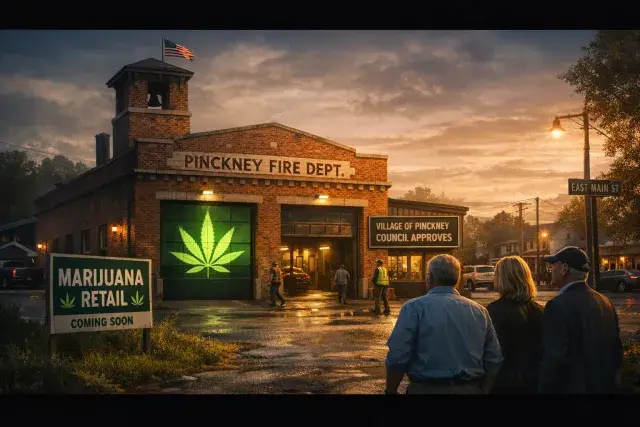
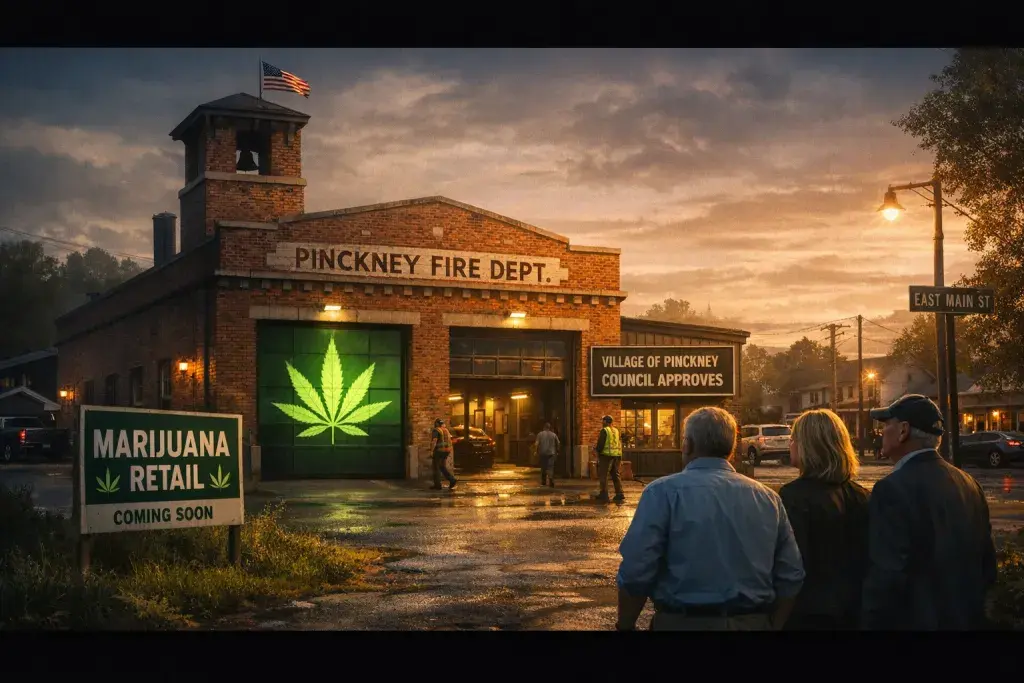
The Village of Pinckney council has greenlit a special land use permit to convert its long-vacant fire station into the area's first marijuana retailer. Located at 1066 East Main Street in the Secondary Business District, the project by QPS Michigan Holdings LLC promises to revive a dormant community landmark. This approval marks a step forward for adult-use cannabis in the village, amid ongoing reviews of existing licenses.
Reviving a Vacant Landmark
The old fire hall has sat empty for years, a reminder of shifting municipal needs in small-town Michigan. QPS Michigan Holdings, operating as C3 Provisioning, plans no structural expansion—keeping the building's footprint intact while adding parking at the rear and stormwater upgrades. Representative Bob Phillips, speaking for the Ann Arbor-based firm, emphasized its established presence: ten retail stores across Michigan and 31 in six states, with expansion to a seventh underway. Village President Jeff Buerman praised the proposal as a solid rehabilitation that aligns with local guidelines, noting the company's compliance with all state and village requirements.
Navigating Michigan's Cannabis Framework
Michigan legalized adult-use marijuana in 2018, spurring a regulated market that now supports hundreds of provisioning centers statewide. Applicants like QPS must secure municipal special land use approval before pursuing a state license, a process the firm initiated in 2021 with recent updates. The Planning Commission had recommended approval with conditions, which the council adopted: updated state prequalification documents and green stormwater techniques tied to the Village Master Plan. No council members raised objections, though questions surfaced about the company's other Michigan sites in Ironwood, Grand Rapids, Kalamazoo, Buchanan, and Constantine.
Uncertain Landscape for Local Operators
This approval comes as the village scrutinizes its sole existing marijuana venture, The Means, housed in the former Pinckney Elementary School. Intended as Livingston County's pioneer, the project stalled amid unspecified setbacks, with operators unresponsive to inquiries. The Means license faces renewal review at August's final council meeting; the Planning Commission has recommended revocation. While no village licenses remain available now, the fire station permit positions C3 Provisioning to apply once slots open, potentially filling a gap in local retail access.
Broader Implications for Rural Retail
Small villages like Pinckney balance economic revitalization against regulatory caution in Michigan's maturing cannabis sector. Repurposing underused public buildings injects new life into downtowns, creates jobs, and generates tax revenue without sprawling development. Yet the special land use conditions underscore priorities like environmental stewardship. As multi-state operators expand into underserved areas, communities weigh the benefits of professional outfits against the risks of unfulfilled promises from earlier entrants. For Pinckney residents, the old fire station's transformation signals cautious optimism in a evolving policy environment.