Editorial roundups like Leafly Picks' list of 11 THC beverages for 2026 reflect a retail category that's grown fast, and largely outside the traditional dispensary channel. These drinks are sold as hemp-derived products under the 2018 Farm Bill, which means they move through a patchwork of interstate shipping rules rather than state-licensed cannabis storefronts. That distinction matters enormously for anyone tracking how this product category is regulated, taxed, and sold.
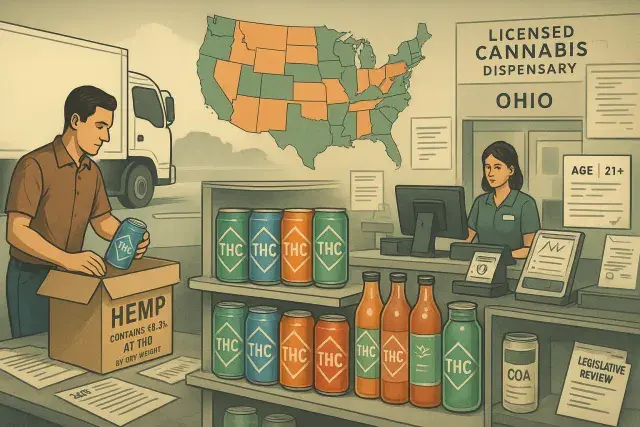
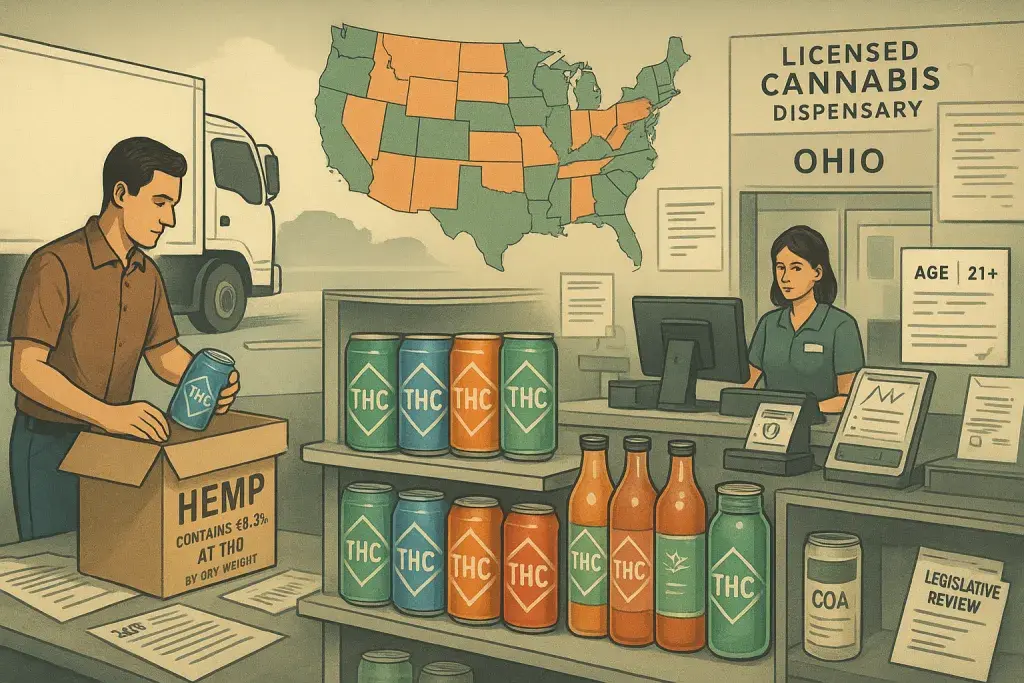
The mechanics here are worth unpacking for retail operators and compliance teams alike. Hemp-derived THC beverages exploit a federal carve-out for hemp containing less than 0.3% delta-9 THC by dry weight, which lets brands ship cans and bottles directly to consumers in states that allow it - no dispensary license required. That's a fundamentally different supply chain than adult-use cannabis retail, where every unit moves through seed-to-sale tracking, state-mandated lab testing, and point-of-sale systems built for compliance reporting. Licensed dispensaries operating in tightly regulated markets, including those relying on a cannabis POS for Ohio dispensaries to manage inventory and tax reporting, follow a far more rigid set of rules than the hemp beverage brands shipping product to a customer's front door. cannabis POS for Ohio dispensaries
Why the Regulatory Gap Matters for Retailers
Here's the catch: hemp beverages exist in a gray zone that state regulators are still catching up to. Some states have moved to restrict or ban hemp-derived THC drinks entirely, treating them functionally like intoxicating cannabis products even though they never touch a licensed dispensary shelf. Others allow sales with minimal oversight. For multi-state operators and wholesalers, this inconsistency creates real friction - a product legal to ship in one state may be a compliance violation in the next, and brands are responsible for confirming legality state by state before fulfilling an order.
That patchwork also raises consumer-safety questions that licensed cannabis retail addresses more directly. Dispensaries selling adult-use or medical cannabis products operate under strict age-verification requirements, mandatory lab testing with published certificates of analysis, and compliant packaging standards enforced by state regulators. Hemp beverage brands aren't uniformly held to the same bar, though reputable companies do publish third-party lab results voluntarily. Buyers should treat the presence of a readily available COA as a baseline requirement, not a bonus, when evaluating any hemp-derived product.
What Operators and Suppliers Should Watch
For dispensary owners and cannabis brands watching this category, the real story isn't the drinks themselves - it's the competitive pressure they represent. Hemp beverages sidestep excise tax structures, 280E tax burdens, and license caps that licensed cannabis retailers absorb as the cost of doing business. That's not a small thing. A product that reaches consumers without the overhead of state cannabis licensing can undercut licensed retail on price and convenience, even while offering a less consistent regulatory safety net.
Fair enough, consumers want options and convenience. But the mismatch between hemp beverage oversight and licensed cannabis retail compliance is likely to draw more legislative attention as sales volume grows. Operators, landlords, and payment processors serving licensed dispensaries should expect state lawmakers to keep revisiting hemp THC rules, and wholesalers stocking both categories need compliance logs that reflect which products fall under which regulatory regime.