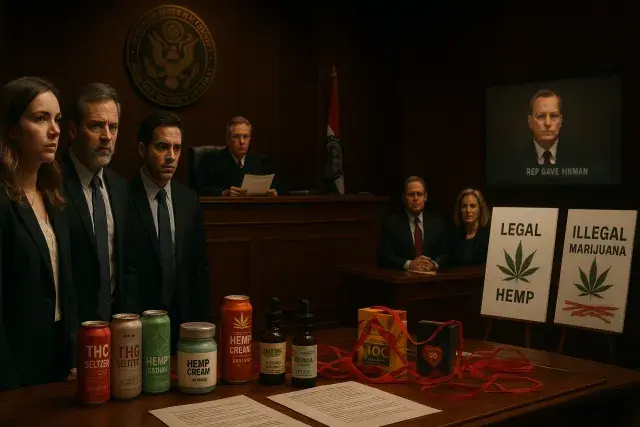
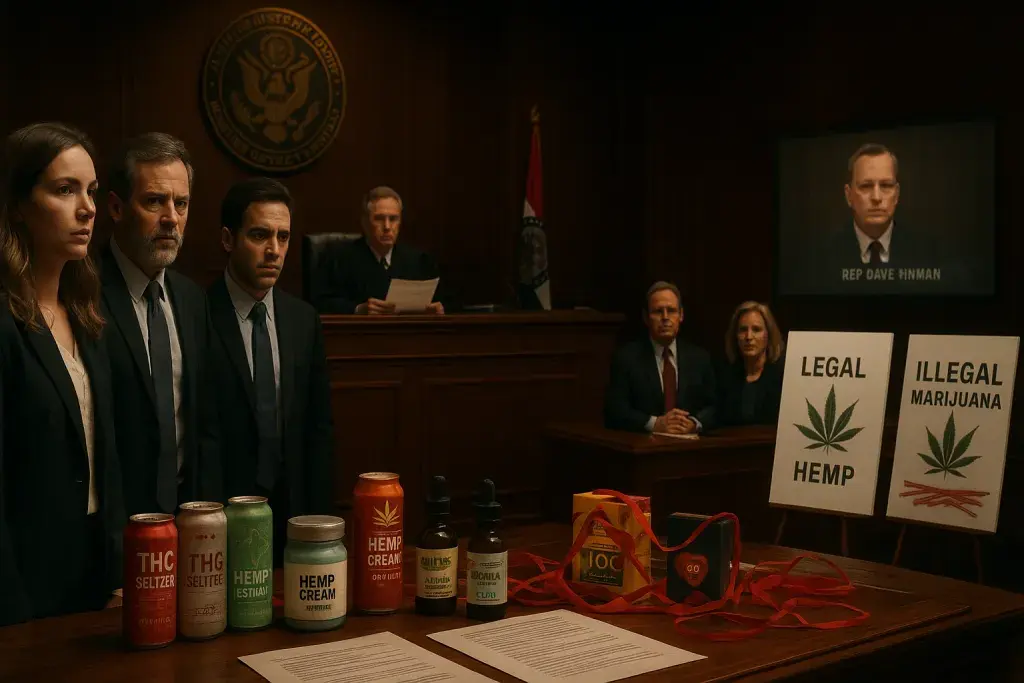
A coalition of Missouri hemp businesses filed a federal lawsuit Thursday seeking to block a statewide ban on intoxicating hemp products from taking effect November 12. The suit, filed in the U.S. District Court for the Western District, targets legislation Governor Mike Kehoe signed earlier this year - among the first bills he approved in 2025 - that would pull THC seltzers, hemp-derived cannabinoid products, and related SKUs from bars, grocery stores, and smoke shops across the state. The plaintiffs argue the law is so poorly drafted it creates criminal exposure for businesses operating in compliance with federal hemp rules.
The coalition includes MNG 2005, Inc., parent company of 55 CBD Kratom retail locations nationwide; the Missouri Hemp Trade Association; and Wisconsin-based Lifted Liquids Inc. Their core legal argument: the legislation, House Bill 2641, defines the same products as both "hemp" and "marijuana" in different provisions - a contradiction that leaves operators, law enforcement, and prosecutors without a coherent compliance standard. That matters enormously, because unlicensed marijuana activity carries criminal penalties under Missouri law. Operators in states that have invested in robust tracking infrastructure - think the kind of compliance architecture built around Minnesota seed-to-sale dispensary software - understand exactly how much a legally ambiguous product classification can disrupt day-to-day operations, inventory management, and regulatory reporting.
Craig Katz, government relations and compliance manager for MNG 2005, said the bill's problems trace back to a fundamental gap in legislative understanding. "A lot of this stuff is kind of in the weeds," he said. "It's very difficult to understand. And when people are trying to legislate it, if they don't understand it, you come up with something like HB2641, which doesn't make a whole heck of a lot of sense." That's a diplomatic way of describing what the coalition's legal filing characterizes as effective date provisions "so convoluted that businesses cannot determine which products are covered or when."
What the Law Actually Does - and Why That's the Problem
HB2641 aligns Missouri law with the federal hemp restrictions Congress approved in the most recent Farm Bill cycle. Starting November 12, all intoxicating hemp products would be removed from general retail. If Congress reverses the federal ban, Missouri would channel those products exclusively into licensed marijuana dispensaries. If Congress delays implementation, Missouri still bans everything except intoxicating beverages. Enforcement authority falls to Attorney General Catherine Hanaway.
Here's the catch: the bill also restricts who may transport hemp products through the state, which the coalition argues directly interferes with interstate commerce - a constitutionally protected category. A law that "promises" not to disrupt interstate hemp commerce while simultaneously limiting transport rights is, to put it plainly, trying to have it both ways.
The bill's sponsor, Rep. Dave Hinman (R-O'Fallon), is not sympathetic. "I believe this is the last ditch effort for the hemp industry," he said, adding that the legislation gives state law enforcement the authority to enforce the federal hemp ban and predicting the lawsuit won't succeed. That may be true. But the compliance ambiguity the coalition identifies is real, and it carries operational consequences that go well beyond one industry's market interests.
The Market Stakes Are Not Small
Missouri's current regulatory gap has allowed products with as much as 1,000 mg of THC - figures that would fail compliance review in any licensed adult-use market - to sell openly in smoke shops, entirely outside the state's licensed marijuana program. That's the environment HB2641 was designed to address, and consumer-safety advocates have legitimate grounds for concern about unregulated, high-potency products moving through general retail channels without the lab testing, COA documentation, compliant packaging, and age-verification requirements that licensed dispensaries must meet.
What's striking here is that the coalition is not arguing for zero regulation. Missouri Hemp Trade Association President Jay Patel framed the issue differently: "This isn't consumer protection. It's the elimination of an entire legal industry coupled with a government-mandated monopoly." The implicit argument is that a better-drafted regulatory framework could protect consumers without criminally exposing businesses that sell federally compliant hemp products - CBD tinctures, non-intoxicating topicals, and similar items the coalition fears will also disappear from shelves under the law's vague definitions.
What Dispensary Operators and Hemp Retailers Should Watch
For licensed Missouri marijuana dispensaries, a successful legal challenge to HB2641 extends the period of unregulated competition from smoke shops and general retailers. A failed challenge accelerates their potential capture of any future intoxicating hemp market - if Congress holds its current position, those products would only move through dispensary channels. Either outcome reshapes wholesale menus, buyer expectations, and retail floor planning.
For hemp retailers operating in Missouri and in other states watching this litigation, the immediate compliance question is whether their current product catalog survives the November 12 effective date - and whether the law's definition problems are serious enough to earn a preliminary injunction before then. The defendants, including Kehoe's office and the Department of Health and Senior Services, have declined to comment on pending litigation. Hanaway's office said it had not yet been served.
Courts have generally given states wide latitude to regulate cannabis and hemp products at the retail level. But constitutional challenges grounded in vague statutory definitions - particularly where criminal penalties attach - have cleared initial review in other jurisdictions. This lawsuit's outcome won't be quick, but the November 12 deadline makes the injunction request the first real test.